Report of the February Meeting of Resolven History Society

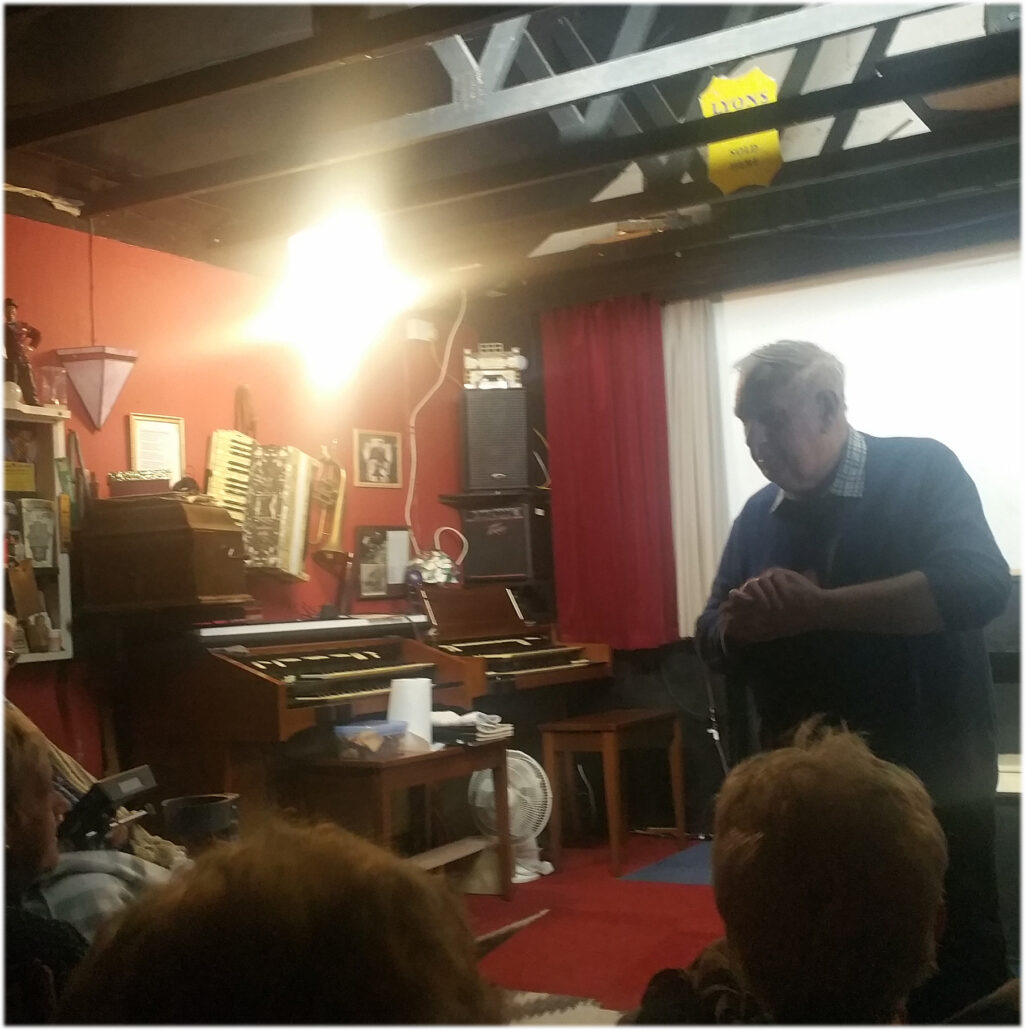
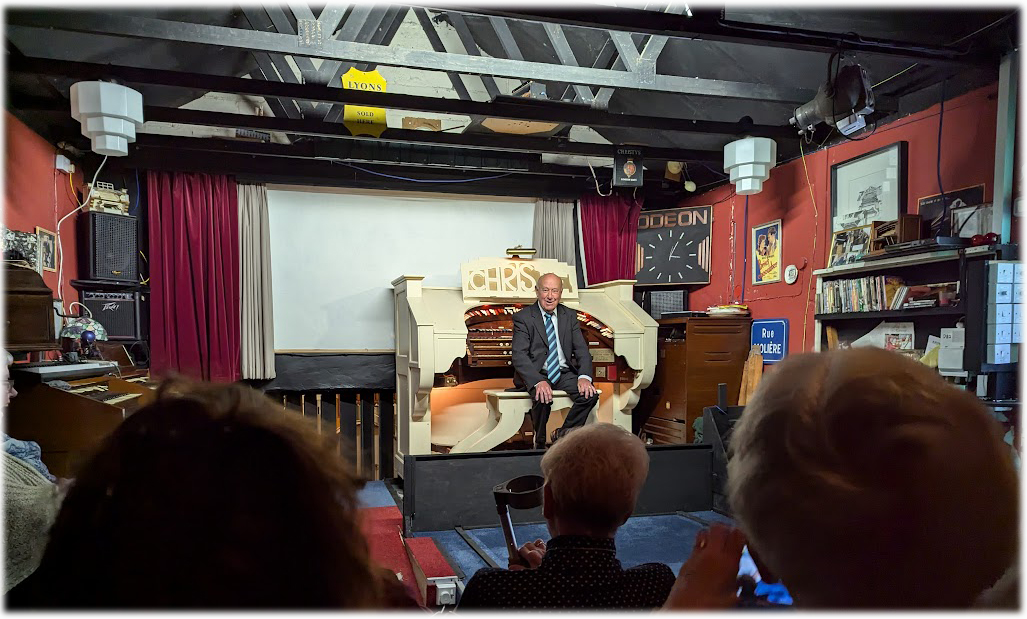
In 2015 an article appeared in the history journal Morgannwg on Friendly Societies in Neath and Mr David Michael of Neath Antiquarians was invited to speak on the topic to the History Society. Owing to work commitments, clashing dates and a pandemic, some nine years later Mr Michael made it, and it was well worth the wait. Since Mr Michael gave a glimpse of a movement once all pervading in its time but now largely forgotten or subsumed into the world of insurance.

During the eighteenth and nineteenth centuries, sickness and welfare was largely absent save for the meagre Parish relief and the workhouse following the Poor Law Amendment Act of 1831. The workhouse split up families and a friendly society was a means to ensure that this did not happen. In order to combat this working men had come together to form friendly societies which would give relief in times of distress but also had a social function in that they were largely based on pubs. The societies had rituals reminiscent of the masonic lodges with joining ceremonies. In essence a joining fee of 10 shillings was followed by smaller weekly contributions in order to ensure relief. In the 1801 century Neath had a population of around 2,500 adults, though this trebled with the advent of industrialization as did the number of societies. Indeed there were 14 societies with a collective membership of 1,222, with the earliest tracing its roots to the Coal Miners Society of 1768. The largest and most prominent group were the Oddfellows, but other more exotic names such as “True Friends” abounded. The money was kept in a box with three keys, though a pub where part of your contribution was to provide the beer was hardly an ideal situation. Indeed some societies lodged their funds with the Gnoll Estate. The Ivorites were an exclusively Welsh friendly society and several societies had Welsh names such as “LLeision Nedd”, in Glynneath and “Iestyn ap Gwrgan”

Resolven was tiny at that time with a population of around 380. Yet it boasted four societies. The New Inn was the home of the Ynysfach Lodge of the Oddfellows in 1841. In 1844 the True Britons Lodge was established at what later became the Vaughans., and in 1862 the Church began its own friendly society which held its meetings at the Vaughans, another society was ensconced at the Gored. The Farmers or Ynysbipan Arms was home to the Foresters Lodge , a society which was more closely masonic in organization. Each society had its sashes, its ceremonies and banners. In return the publican did exceedingly well from the proceeds. The processions were not unlike those of the Whitsun marches of recent memory, and were usually accompanied by a brass band. These were illustrated by Mr Michael in his talk.

The Societies declined during the 20th century as they became redundant as a welfare state tookover much of their role. The Peoples’ Budget of 1909, and the establishment of both an old age pension and national Insurance. The reforms of the Attlee government in 1945, and the provision of a National Health Service in 1948 made the notion of a self-help society redundant. The Oddfellows held their final annual meeting in Neath in 1980.

~

Mr David Woosnam thanked Mr Michael for a memorable talk, and hoped members would take up his offer of a course with the Antiquarians in order to further explore the history of friendly societies in Resolven.

Trefor Jones

~ ~ ~ ~

Funeral Notice for Mr Marc Anthony

On Valentine’s Day

Image by Mike Davies

Funeral Notice for Mrs Amanda Jones

Got My Beady Eye On You

.

Camera -aware blue tit feeding in Ruth Davies’s garrden yesterday

Ruth is keeping up the family tradition by giving us great shots for RDN– just like Michael her much missed Da,d.

Free Tai Chi Session

Just letting you know we are running a free tai chi taster session for people with arthritis and related conditions such as lupus, fibromyalgia, carpel tunnel, gout and other related musculoskeletal conditions.  It will be held on 8th February in the community resource centre near Morrisons supermarket, Baglan, Port Talbot

   Those wanting to attend have to register so we know the numbers attending.   This session can be done seated or standing.  Attendees will learn about the benefits of tai chi for managing arthritis as well as having an opportunity to try it

Funeral notice for Mr Howard Davies

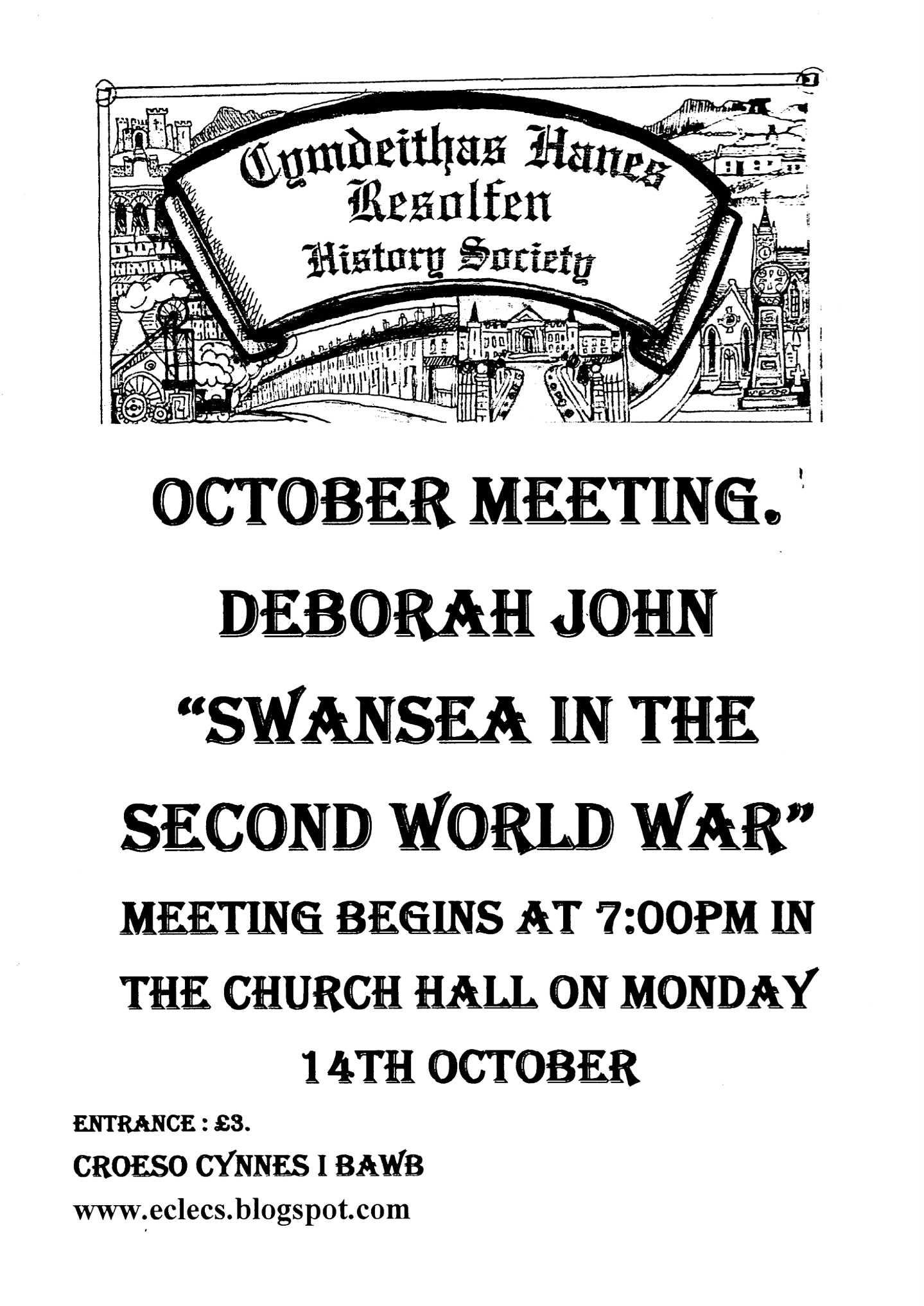
Resolven History Society February 2024 Meeting

~ ~ ~ ~

Funeral Notice for Mrs Joan Hardman

Report on the January Meeting of the Resolven History Society

This is a Report on the January Meeting of Resolven History Society

Despite the cold, new-year weather, some sixteen members attended this month’s meeting. They were not to be disappointed, since the speaker this month was Mr John Richards who was to speak on the death of Richard the Third in 1485. The Chair , Mr David Woosnam, said that this was Mr Richards’s seventh occasion in speaking to the Society and that he had spoken on an eclectic range of topic ranging from the theatre of Shakespeare to the derivation of surnames.

Mr Richards began his talk by stating that because of the notoriety of the Princes in the Tower, Richard the Third was well known despite only being monarch for a mere two years, before his defeat by the Welshman Henry the Seventh at the Battle of Bosworth. Shakespeare had labelled him as a hunchback and a rather dark character, and there is little doubt he was complicit in the death of the princes who threatened his claim to the throne. Following a detailed explanation of the rivalries between the York and the Lancastrians in the thirty year period known as the Wars of the Roses, Mr Richards turned his attention to Bosworth.

Henry landed near his Pembrokeshire birthplace near Dale, and proceeded to march through Wales. A nominally Lancastrian army led by Rhys ap Thomas, initially shadowed him, and then switched side to the Tudors. At Bosworth, in Leicestershire, Richard fought bravely but was eventually killed in the battle, and his soldiers appeared to lack vim and vigour, despite having superiority in numbers. Importantly, his body was lost. In August, 2012 at a car park in Leicester, under the regal letter “R”, a body was found and subsequently identified as that of Richard.

Mr Richards then elaborated with the use of medieval weapons and a skull what the consequent post mortem of the body would show about. The numerous wounds indicated that he had indeed fought bravely and had succumbed to the long pointed sword and dagger which would prize open the chain mail, in addition he had been stabbed in the groin and in the eye. An examination of his backbone indicated that he suffered from scoliosis, rather than him being a hunchback. He lacked any feet, which may have been due to a plough on site, and Mr Richards added wryly that he had indeed been “de-feeted”, much to the mirth of some audience members. 

Mr David Woosnam thanked Mr Richards for a wonderful talk, and hoped he would return in future to address the Society. Next month’s the speaker will be Mr David Michael of Neath Antiquarians, who will speak on the fascinating topic of ”Pubs and Friendly Societies”.

Trefor Jones

Funeral Notice for Mrs Megan Lloyd

Funeral Notice for Mr Roy Jenkins

Funeral Notice for Mrs Sandra Ingham

o

Letter from Resolven Community Council

~ ~ ~

Jack_Walkaholic in South Pembrokeshire

Part 2

We Continue with the next instalment (around South Pembrokeshire) from Jack_Walkaholic as he resumes his journey to complete the wonderfully scenic walk around the Coast Path of Wales.

~ ~

I look at the map of Wales and don’t realise how big Pembrokeshire is; it’s the same distance around as from Chepstow to Kidwelly. You can see the story so far on previous posts on Resolven District News, or if you want to see the whole story you can find me on Instagram @jack_walkaholic.

Pembroke

Starting at Pembroke Castle, I go around the moat and into a woodland, heading towards Pembroke Dock. The path weaves its way through the streets of Pembroke Dock, and ends up overlooking the estuary and Neyland Bridge. I hear on the radio that Neyland Bridge is closed due to high winds and as I look at it, I can see why it would be a problem for high-sided vehicles. This is the crossing point that I’m heading for as the path takes a blustery step across the bridge.

Neyland – Brunel Statue

Neyland is one of those places that I’ve never been to. I’m impressed by the bridge viewpoint and the Brunel Park. Out of Neyland and around another oil refinery. Before I know it, I’m in Milford Haven. The name Milford Haven conjures up a picture of the oil refinery and docks in my head. I’m surprised to see a Georgian promenade and a bustling town centre. It doesn’t have a sandy beach, and I think that’s what holds it back from being a big tourist town.

Milford

Goodbye Milford Haven, hello another oil refinery. This is the most industrialised part of the path. It takes you through caged bridges and under pipelines. All of a sudden the path turns and you’re facing away from the waterway. It’s a different world. I didn’t realise how tense it had felt walking around this metal monument, with no people, just machines and ships constantly buzzing and moving things. You turn and it drifts away, all that tension is gone.

Kilroom (St Thomas’ Bay)

Just when you think it couldn’t get any better, a nice sandy beach. This one is called Sandy Haven and is a well-kept secret. The road to this beach is overgrown and has a small car park, so the locals want to keep its location secret. This is my endpoint for the day, so I sit and watch the tide for a while.

~

Sandy Haven

There’s a set of stepping stones at Sandy Haven. They’re only available for three hours either side of low tide. If you don’t time it right, there’s an extra four-mile walk around the estuary. Luckily, I timed it right (only just).

Sandy Haven

This was a beautiful day. The sun was beating down and a lot of the next few miles were on clifftops and open fields. The next village has a river crossing. This is a wooden gangway. The gangway is broken, but as the tide was low, and encouraged by a local fisherman, I decided to jump from one side to the other. I got wet! Here I found my first ever piece of sea glass in Dale.

Apparently, there’s a lot of it here. Along the road and into Dale. Dale is a water sports hotspot. Any type of water sport you can think of goes on here. The place is busy with people preparing to take to the water.

.

I quickly leave, back to the fields, cliffs and cows. I’m plodding towards Saint Ann’s Head. The geology is what makes Pembrokeshire Coast a National Park. There are so many textbook faults, folds, and fractures along the way. Not too far from the lighthouse at Saint Ann’s is a lovely formation.

St Ann’s Head
.
Westdale Bay

Onward. Did you know Dale has a second beach? This one is called West Dale Bay and has big waves coming straight off the Atlantic onto its golden sand and red rock. A little further along, past the remains of an airfield, I see the view that I’ve seen on many Wales calendars: Marloes Sands. This is a postcard beach, with a beautiful long, light golden sand, huge waves, some unique geological features, and a blue sky.

Marloes Sands
.

With a tear in my eye, I have to leave. Around the Raggle Rocks, I pass by Gateholm Island and Rainy Rocks. My destination for this day is Martin’s Haven, most famous for being the place to get a boat to Skomer Island to see the puffins. The two days I was in the area, the sun was out and it was a hot day, but the boats weren’t running.

Marloes Sands
Martin’s Haven

Another day dawns and I just have one bay to walk around: Saint Brides Bay. Starting at Martin’s Haven, I head north up the coast. The geology in this part is diverse. For a while, I’ve noticed the rock colour. It’s a red colour that I associate with Pembrokeshire, but at Musselwick Sands, it changes to a black rock. I continue to St Brides Haven, a small haven with a big house that is now a luxury hotel. It looks fantastic. Before I know it, I’m in Little Haven. From Little Haven to Broad Haven, I stay on the beach and admire the caves in the rock face.

Musselwick Beach
.
St Brides Castle
Little Haven
Broad Haven

From Broad Haven, Druidston Haven is a short skip away. This is an impressive beach with steep cliffs all around and just one access point. Caves in the rocks make me think that pirates were active in this area, with plenty of places to hide their loot.

Druidston Haven
.

Norton Haven is the next stop. There are a lot of havens around here. It’s a sweet, quiet place sandwiched between the two larger and better known tourist spots of Broad Haven and Newgale.

Norton Haven

Newgale is a camper’s dream. In the summer, the campsite is crammed with tents, caravans, and mobile homes. The campsite is on one side of the road and the beach on the other. It’s a good long beach, with big waves, popular with surfers and anyone who loves the water or sand.

Newgale Beach
.

As it has a good car park, I finish my day at Newgale and return a week later to continue. On both days, the tide was in, the sun was out, and the beach looked amazing. There are a few small coves and rocks along the way, but the next main place is Solva. This beautiful harbour is sheltered from the sea by a headland that curves in, so it doesn’t receive the full force of the open sea. It’s a popular tourist hotspot. Many people come to see the harbour and there’s a cafe on the quay that I have to fight my way through the crowds to pass.

Solva
View of Solva Harbour
Caerfai

Pushing on, I come to Saint Non’s chapel. This chapel was built on the place where Saint David was born. On that day, there was a great storm everywhere, except here where the sun beamed through the clouds. The pain of giving birth was so bad that Non squeezed a stone tightly and left the marks of her fingers in the stone. This stone is now concealed in the base of the altar.

St Non’s Chapel

Moving on, Porthclais is next. A sleepy harbour not too far from St David’s. In recent years, places like this have found new life as more people take up kayaking and other water activities. 

Porthclais

The path goes on, so do I. It’s been just over 350 miles so far, with 520 miles to go. The path weaves its way around the coast, eventually facing Ramsey Island. Ramsey is the fourth largest Welsh island and this is the point on mainland Wales that is the furthest west.

The most Westerly point on mainland Wales opposite Ramsey Island

I continue north and east, past St Justinian’s and its lifeboat station, around a headland, and I’m faced with Whitesands Bay. A glorious strip of golden sand and blue water, the gentle hush of the waves as they slip up the beach.

St Justinian’s
Porthselau
Whitesands

It’s time for an ice cream and a few days off, but I’ll be back to finish Pembrokeshire.

~ ~ ~ ~